Cultur Vultur / Design & Architecture
Design and architecture, from sketch to street.
Architecture, design, places and ideas worth discovering across the city.
Cultur Vultur / Design & Architecture
Architecture, design, places and ideas worth discovering across the city.
Loading events…
Cultur Vultur / Design & Architecture
Architecture, design, places and ideas worth discovering across the city.
Loading events…
45 talks, tours and events in the next 7 days
Showing 76–100 of 241 events76–100 of 241 events
Join us for an African Heritage Tour at Tate Britain
Join us for an African Heritage Tour at Tate Modern
Join our expert panel’s exploration of how architects can move beyond temporary shelter and use design to prioritise human dignity.

Beau Lotto of Hummingbird Learning Lab, Piers Taylor of Invisible Studio and Julia Barfield of Marks Barfield Architects are hosting an interactive brainstorm exploring ways to help clients get radical projects off the ground, and to challenge the conventions that hinder collaborative, regenerative design. Key questions include: How can collaborative relationships foster creativity without duplicating effort and costs? How can clients ensure that everyone’s work is properly valued and rewarded without loading the project with unrealistic expectations and costs? What alternatives are there to the siloed working and adversarial culture embedded in traditional models of appointment, procurement and insurance How can funding, fees and incentives be aligned to minimise costs and carbon while unlocking the full potential of regenerative design? Partner: HDR Tickets £15. Free for students Find out more

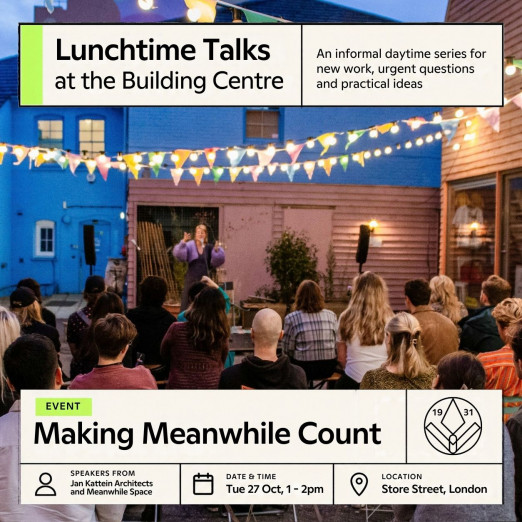
Making Meanwhile Count How can temporary spaces create lasting social impact, and what happens to the value they create when the projects themselves come to an end? Join Jan Kattein Architects and Meanwhile Space for a lunchtime talk exploring how we understand and value temporary interventions within processes of urban development that are usually focused on long-term or permanent outcomes. Jan Kattein Architects, a London-based architecture and urban design practice, and Meanwhile Space, a social enterprise specialising in transforming vacant spaces for community benefit, have been collaborating on time-limited urban projects since 2016, using vacant sites to provide affordable workspace and community space in the short term. The value of meanwhile use is increasingly recognised within planning and regeneration: local authorities may use it to bring activity back to high streets, while developers can use temporary projects to establish place identity, test new uses and support emerging local economies. But what happens beyond the ‘meanwhile’ period? These projects can also test more sustainable uses, build local capacity and networks, and create a more participative, organic and phased approach to development. Understanding that longer-term influence requires us to look beyond conventional measures of social value. Blue House Yard, the first meanwhile project delivered collaboratively by Jan Kattein Architects and Meanwhile Space, is approaching its tenth anniversary. Originally intended to remain for just five years, it will eventually make way for comprehensive redevelopment. This moment provides an opportunity both to understand and, where possible, quantify its impact, and to ask how the relationships, activity and value created there might endure after the project itself has gone. Drawing on Blue House Yard alongside other case studies and recent research collaborations with the Politecnico di Milano and UCL, the speakers will explore how the influence of temporary projects can be understood at neighbourhood scale. Combining data with stories of personal and community impact, the talk will consider how social value is created, who gets to define and measure it, and how lessons from temporary projects can inform longer-term regeneration. Expect a visually engaging discussion bringing together the perspectives of architect and operator, and opening up wider questions about how we can make meanwhile uses count long after the ‘meanwhile’ has ended. Speakers Gabriel Warshafsky Director of Urban Strategy, Jan Kattein Architects Gabriel is an architect and educator committed to socially engaged design practice. As Director of Urban Strategy at Jan Kattein Architects, he works with communities to develop stakeholder-led regeneration projects for high streets, town centres and housing estates. His work promotes inclusive, creative dialogue as an integral part of the design process, spanning furniture and public art installations, transformative meanwhile projects, long-term masterplanning and policy. He also teaches interdisciplinary design at the Bartlett School of Architecture and is a founding associate of STORE C.I.C., an educational initiative dedicated to broadening access to creative careers. Jan Kattein Architects | LinkedIn Jen Storan Projects Director, Meanwhile Space / Meanwhile Foundation Jen has spent the last seven years exploring ways to repurpose vacant land and buildings for local communities. Working across Meanwhile Space CIC and its sister charity, the Meanwhile Foundation, she leads new project development and meanwhile use strategies. She is currently delivering a National Lottery-funded programme to increase the social value generated by existing meanwhile use sites and equip more people to develop their own projects. Her interests include how temporary and experimental urban interventions can catalyse incremental neighbourhood transformation, including projects such as LJ Works in Loughborough Junction. She holds an MASc in Global Urbanism from UCL. Meanwhile Space | Meanwhile Foundation | LinkedIn About the Building Centre's Lunchtime Talks Our Lunchtime Talks bring together people working across architecture, design and the built environment to share ideas, explore new approaches and encourage discussion. Free to attend. Booking recommended. Have an idea for a talk? We're always looking for fresh perspectives and interesting projects to share with our audiences. Find out how to propose your own Lunchtime Talk through our open call.
This lecture is jointly convened by the American Institute of Architects (AIA) and the Royal Institute of British Architects (RIBA), in partnership with Spatial Practices, Central Saint Martins, University of the Arts London. The AIA and RIBA have a long history of collaboration dating back to the founding of their institutes in 1857 and 1834 respectively, and are delighted to present this year's keynote lecture with Central Saint Martins. This event is being held in person with drinks and canapes to be served after the lecture. About Craig Dykers Born in Frankfurt, Germany, Craig Dykers is an architect, educator, and founding partner of the internationally acclaimed design practice Snøhetta. Educated at the University of Texas at Austin, he co-founded the Oslo-based practice in 1989 and later helped establish its New York studio, contributing to the firm's emergence as one of the world's most innovative multidisciplinary design practices. For more than three decades, Dykers has led projects that blur the boundaries between architecture, landscape, urbanism, and cultural infrastructure. His work is distinguished by a commitment to creating environments that strengthen the relationship between people, place, and the natural world while fostering social interaction and civic engagement. Throughout his career, Dykers has championed an inclusive and collaborative design process that brings together multiple disciplines to address the environmental and social challenges facing contemporary cities and communities. He has lectured extensively across Europe, Asia, and the Americas, and has served as a visiting critic, professor, and juror at leading architecture schools and institutions. His work has received widespread international recognition, including projects honoured with the Aga Khan Award for Architecture and the European Union Prize for Contemporary Architecture (Mies van der Rohe Award), among many other distinctions.

Jonathan Smales, Human Nature’s visionary founder, calls for rigorously sustainable neighbourhoods forging a new generation of civic assets

We are excited to announce the 2026 AIA UK/ RIBA Keynote Lecture with Craig Dykers of Snøhetta!

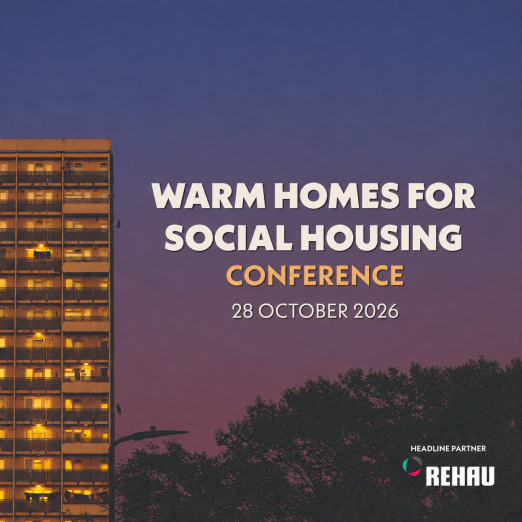
The Government’s Warm Homes Fund has pledged £5bn of funding for upgrading the energy efficiency – and reducing the carbon emissions of – housing in the UK. This replaces the Social Housing Decarbonisation Fund, with a national initiative which resets the focus onto resident benefits such as warmth and lower bills, rather than the mechanics of reducing carbon emissions. The social housing sector is tasked with tackling millions of properties with an initial £1.5bn of funding. This will be an unprecedented wave of upgrades – from heat pumps and PV, to building fabric including a range of insulation measures – to raise all homes to an EPC rating of ‘C’ by 2030. There remain a host of questions for the sector however, as it awaits Government confirmation of the incoming fourth wave of Fund spending to support this major endeavour. We will be continuing a series of in-depth discussions with the housing sector, policymakers, industry experts, and the wider supply chain, with a focused one-day conference looking at the opportunities as well as challenges posed by the Warm Homes Plan for retrofitting social housing. We will bring together key stakeholders to share best practice strategies and practical solutions for holistically increasing properties’ energy performance, with the aligned aim of decarbonising social housing by 2050. In spring 2026 we staged a round table looking at smart measures to tackle the continuing risk of fuel poverty, including housing providers, academics and supply chain partners. This conference will enable a broader range of presentations and discussions in a concise and impactful format. It also offers an excellent opportunity to network with peers from across housing, construction, and sustainability. There is growing momentum across the UK to deliver net zero targets within social housing, alongside increasing regulatory pressure and funding initiatives aimed at accelerating retrofit programmes. While there is a strong and evolving body of guidance around whole-house retrofit, low-carbon technologies, and fabric-first approaches, key questions remain around how effectively this knowledge is being translated into large-scale delivery. Housing associations and local authorities are under increasing pressure to upgrade existing housing stock, improve energy efficiency, and reduce carbon emissions, while also managing cost constraints, tenant disruption, and performance risks. From strategic asset planning to the selection of appropriate solutions, and practicalities of installation, monitoring, and maintenance, there are a host of retrofit challenges to address. How can housing providers, designers, contractors, and technology partners collaborate more effectively to scale delivery? How can funding, policy, and regulation better support long-term, sustainable outcomes? And how can tenant engagement be placed at the heart of social housing upgrades to ensure solutions are both effective and equitable? This conference will bring together a wide range of expert voices to share insights, case studies, and lessons learned, with the aim of supporting the sector in moving from ambition to action. Delegates will also be encouraged to actively contribute to discussions, helping to shape a more collaborative and solutions-driven approach to Warm Homes Plan-backed social housing upgrades, for the future benefit of tenants.
A lecture by Boudewijn Thomas, co-founder of MVRDV NEXT

Screening of The People’s Emergency Briefing, a 50-minute public information film hosted by naturalist Chris Packham that presents evidence on the UK’s climate and nature crisis, drawing from a live Westminster briefing held for politicians in November 2025. The screening will be followed by a Q&A and panel discussion with experts from across the industry. Partner: UK Architects Declare Tickets £15. Free for students

Join us for a screening of two films exploring the effects architecture has on people, accompanying Monika Sosnowska’s current exhibition Weight of Matter. Set against London’s changing landscape, the films explore how architecture affects us psychologically and physically, as well as the social and political ideas embedded in the built environment. PROGRAMME Emily Richardson, Block, 2005 (12 min) Block is a day and night portrait of a tower block in southeast London. Working with a static camera, the fixed shots are repeated and edited together in sequence, similar to CCTV footage that flicks from one camera view to another. The film captures repetition, surveillance-like observation, and everyday rhythms inside a modernist housing structure. Charlotte Ginsborg, The Mirroring Cure, 2006 (28 min) Tracing the life of a large construction site from demolition to the completion of new…
London-based architect Takero Shimazaki discusses the ideas and design approaches behind a selection of projects by t-sa, including the recently completed Yard Theatre in Hackney Wick.

What do we mean when we talk about inclusive design, and why does it matter?
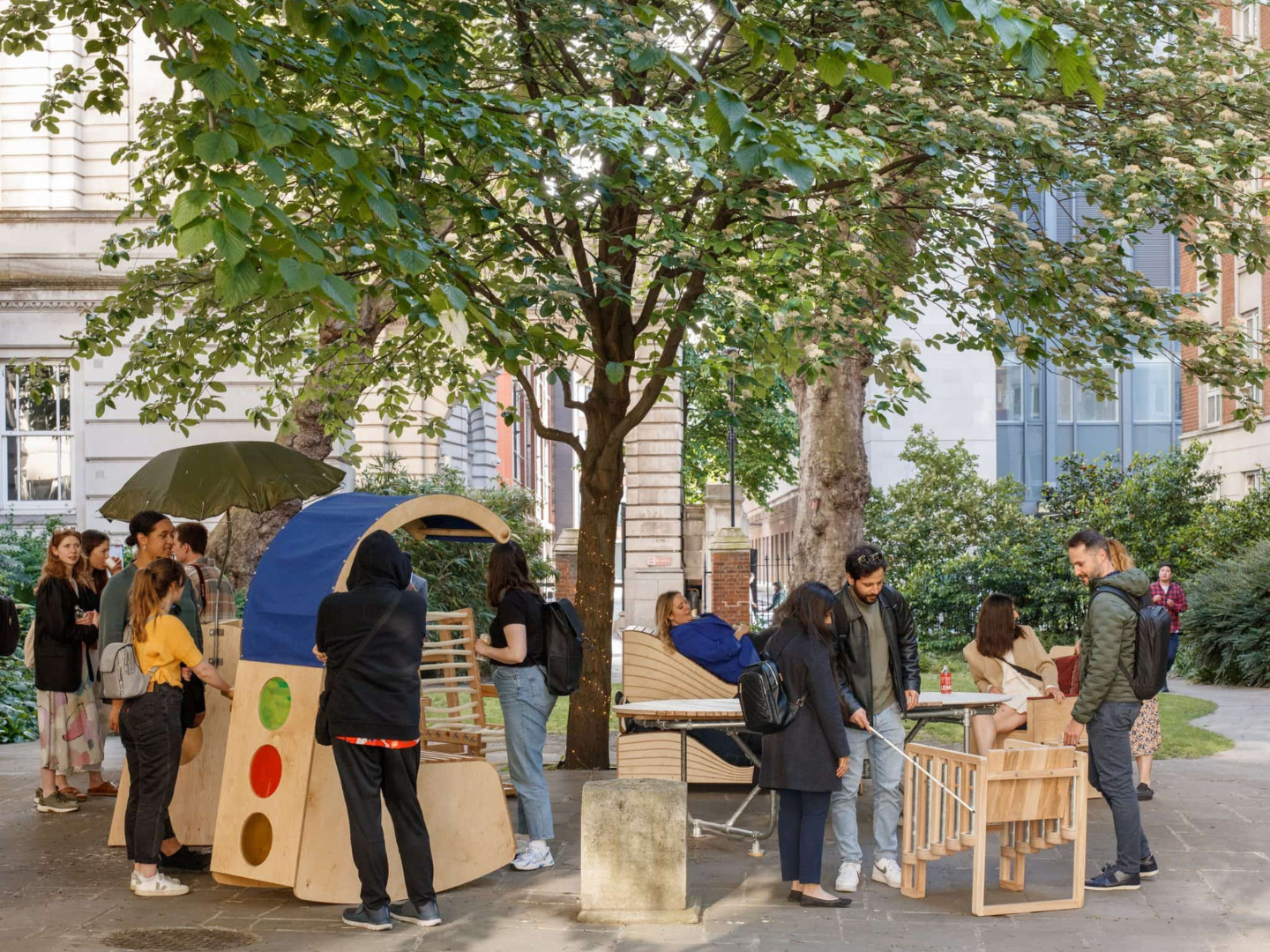
Explore 300 years of the Bank of England’s architectural history through our walking tours.

“The status quo is unsustainable. As the next generation, we cannot afford to stand by and wait for permission to make transformative change.” To conclude Regenerative Design 2026, Architects Declare’s Next Gen Ambassadors welcome a young panel of guest speakers to discuss how collective action and alternative contemporary practices have the power to alter the way we approach architecture, carving out a new future for the discipline. Chaired by Eimear Kernan and Architecture Today’s Nelly Greig, the event will include talks from those at the forefront of architectures next generation; from Tipping Point East, to the organisers of this years European Architecture Students’ Assembly. The event will finish with the launch of AD’s Next Gen Ambassadors’ “Future Ancestors”: an exciting new resource compiling best practice examples and key information to assist students in applying regenerative design principles in university projects and in practice. Partner: UK Architects Declare| Free to attend Find out more

As UCL turns 200, the Bartlett looks to the past to ask what built environment education must deliver for sustainable futures across Africa.

A Ghost Story by Candlelight, 6pm, £58.00 (+ £2 booking fee) (sold out). A Ghost Story by Candlelight, 8pm, £58.00 (+ £2 booking fee). Walter de la Mare's haunting short story Out of the Deep is reimagined for Dennis Severs' House at Halloween. The supernatural tale comes eerily to life when read by a flickering fire in its candlelit Withdrawing Room. Guests will be served a glass of Cremant or a soft drink in the atmospheric ground-floor Dining Room before taking their seats for an evening of spine-tingling entertainment. Performed by Lisa D'Agostino with music and sound by Dominic Stokes. This is for the curious but not the faint hearted.

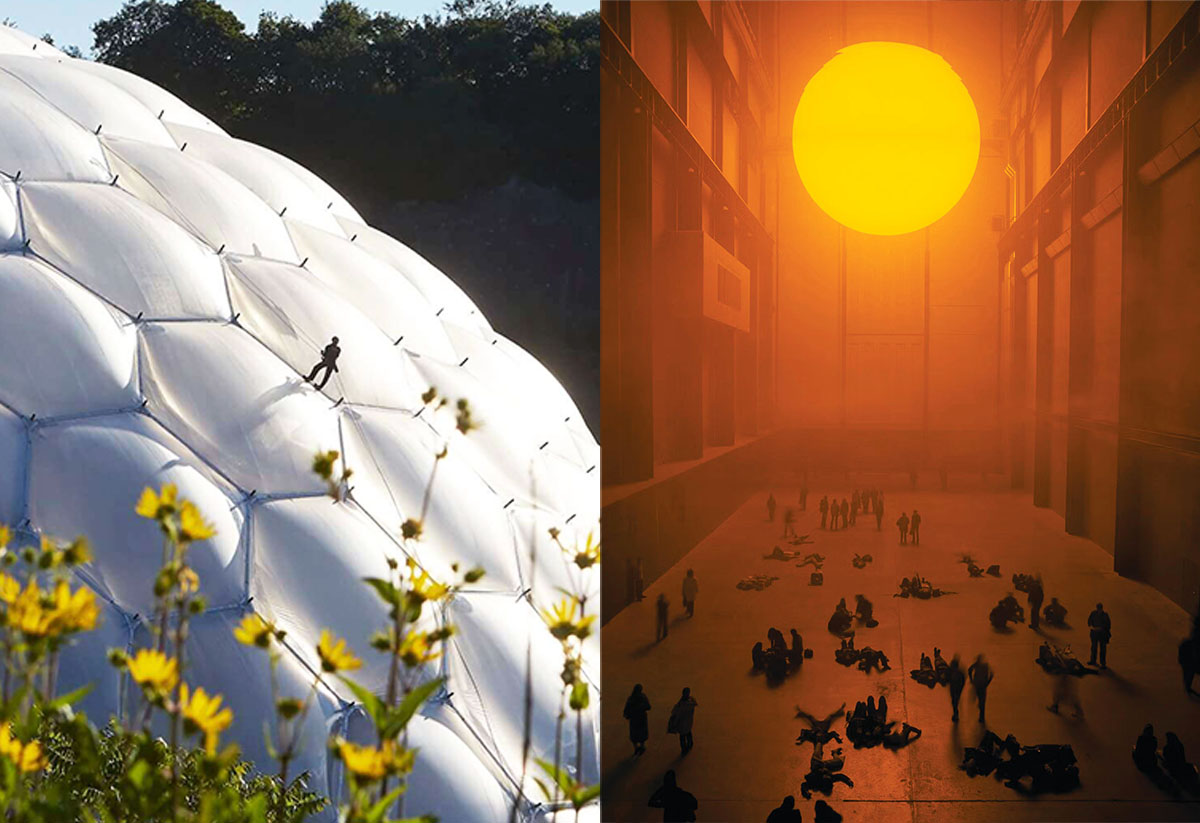
Learn more about some of the best 21st-century architecture from the people who made it happen. We’ve paired leading architects and academics for themed lectures where they will present their work, before sitting down to discuss their individual approaches to similar projects. Leading architecture critic Rowan Moore will give us a lecture on Millennium Architecture. Think Tate Modern, Eden Project or National Centre for Popular Music in Sheffield. These breath-taking feats of design and engineering provided new public spaces, vantage points and emblems for our country. But how have the landmarks of the new millennium stood the test of time? We’ll explore the vision and commitment behind their creation, the intense media coverage and public debate that followed, and discuss their burgeoning legacy a quarter of a century on. The event is chaired by Laura Mark – architecture critic, former Architect's Journal editor and current Head of Casework at C20. Rowan Moore is architecture critic of the Observer and was named Critic of the Year at the UK press awards. He is the author of Slow Burn City: London in the Twenty-First Century (2016, Picador) and Property: The myth that built the world (2023, Faber&Faber). The series coincides with the new C20 book 100 21st Century Buildings (2026, Batsfords). To book an online ticket for this lecture, click here. Buy the whole lecture series and save. The ticket price includes a glass of wine and a contribution to our casework and campaigns. Note: This event is hybrid and is being run both in-person at Cowcross Street Gallery and online via Zoom. The event will be recorded and offered as a catch-up lecture for those who have booked and will be available for two weeks.
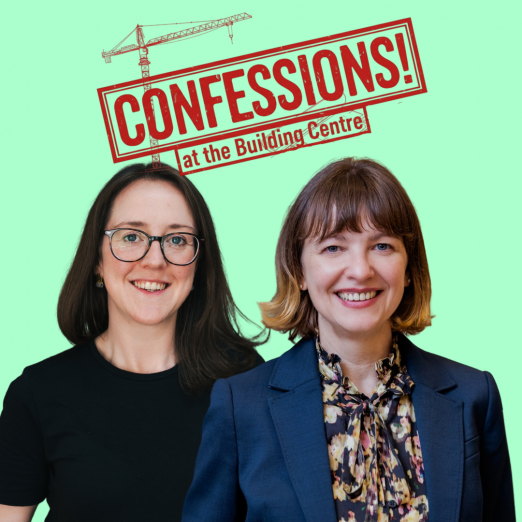
Planning is where some of the biggest questions facing the built environment become real: what gets built, what gets protected, who gets heard, what is prioritised, and how decisions are made in the public interest. For this edition of Confessions!, architect and Building Design columnist Eleanor Jolliffe is joined by Rachel Fisher, Chief Executive of the Royal Town Planning Institute, for a candid conversation about planning, policy and the difficult work of navigating complexity. Confessions! is the Building Centre’s live series where people from across architecture, housing, planning, design and construction share stories of when things did not quite go to plan — and what they learned along the way. Each session mixes storytelling, humour and reflection, with audience members invited — but never obliged — to submit their own anonymous confessions for Eleanor to read on stage. Rachel was most recently Deputy Director for Food at the Department for Environment, Food and Rural Affairs. Prior to her role in food strategy and security, she spent five years as Deputy Director of land use policy, where her work included Biodiversity Net Gain and the Land Use Framework for England. She was also a Deputy Director in the Cities and Local Growth Unit, within the Ministry of Housing, Communities and Local Government and the Department for Business, Energy and Industrial Strategy, where she led on regeneration investment and policy, from high streets to HS2 growth strategies. An associate member of the RTPI since 2007, Rachel brings expertise across the built environment and a track record of delivering policy change both inside and outside government. In conversation with Eleanor, Rachel will reflect on the realities of working across planning, land use, environmental policy and regeneration: the competing pressures, professional judgements and moments of uncertainty that sit behind public decision-making. Expect an evening about complexity, clarity, responsibility and the art of planning — with space for humour, honesty and the occasional confession. Event details Date and time: Thursday 29th October, 6:30pm Location: The Building Centre, 26 Store Street, London WC1E 7BT Tickets are £5, with optional £7 and £10 tickets available for anyone who would like to contribute a little more in support of the Building Centre’s talks and public programme. We want Confessions! to remain accessible, so if cost would prevent you from attending, please email ssheriff@buildingcentre.co.uk and we will arrange a free ticket. Feeling brave? You can also submit a confession anonymously. It might just be shared by Eleanor on the night.